
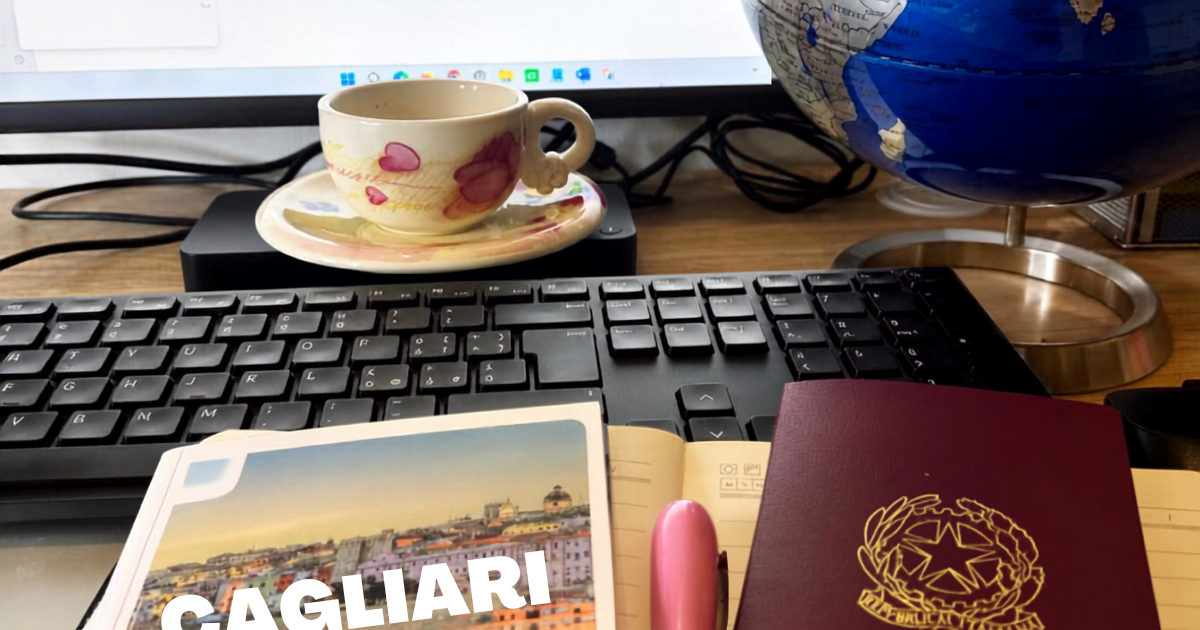
Over the past few months, I have started hearing the same answer more and more often when I ask our guests a simple question:
“How did you find this experience?”
Until recently, the answers were usually predictable: Google, our website, social media, a booking platform or a recommendation from someone they knew.
Now, however, another answer is becoming increasingly common:
“We asked AI.”
And this may be one of the most interesting changes currently taking place in travel.
The real shift is not simply that travellers have another digital tool available to them. What is changing is the way people search for information and, above all, the way they ask for advice when planning a trip.
We used to search. Now we ask.
For many years, planning a trip meant opening a search engine and typing something like:
“what to see in Cagliari”
“best restaurants in Cagliari”
“wine tasting Sardinia”
“things to do in Sardinia in three days”
Today, a traveller can ask a much more detailed question.
For example:
“I’ll be spending four days in Cagliari. I’m mainly interested in food and wine, I’d like to avoid overly touristy experiences, I’ll have a car and I’d also like to visit some local producers. What would you recommend?”
The difference may seem small, but it is not.
The traveller is no longer simply asking for a list of results.
They are explaining who they are, what they enjoy, how much time they have and what kind of trip they want to experience.
And they are asking artificial intelligence to turn all that information into personalised advice.
AI is already becoming part of travel planning
In 2026, the use of artificial intelligence for travel planning is no longer just a prediction.
Google reported that search interest in terms such as “AI travel assistant” and “AI concierge” increased by 350% year over year, while searches for “AI flight booking” rose sharply as well. AI-powered travel tools are increasingly being used to combine information about destinations, flights, hotels, maps, restaurants and activities into more personalised travel plans.
IMG’s 2026 Travel Outlook Survey, based on more than 1,000 responses from the company’s customers, found that 33% of respondents said they were likely to use AI tools such as ChatGPT, Gemini, Copilot or Claude to help plan their travels in 2026.
Among those likely to use AI, the most common uses were:
recommendations: 75%
itinerary planning: 70%
discovery and ideas: 69%
comparisons: 55%
booking: only 13%
This distinction is important. AI is currently used much more for inspiration, discovery and planning than for completing the booking itself.
Is artificial intelligence becoming a new travel agent?
Not yet, at least not in the traditional sense.
A travel agency remains a professional operator with specific responsibilities, expertise and services.
Artificial intelligence currently plays a different role: it works mainly as a research, planning and decision-support assistant.
It can help travellers compare destinations, organise itineraries, evaluate distances and timings, find restaurants and experiences, and adapt recommendations to individual preferences.
Some systems are already going further.
Gemini, for example, can combine real-time information from Google Maps, Flights and Hotels to build customised itineraries. It can also use personal preferences and existing bookings to refine a travel plan. Google’s AI-powered search tools can now compare real-time travel options and, in some cases, help users move from planning towards booking.
Travel companies are moving in the same direction. Omio, for example, is developing conversational travel experiences designed to move from traditional search towards personalised, bookable journeys.
The boundary between search, recommendation and booking is therefore becoming increasingly blurred.
From search to conversation
This is perhaps the most significant change.
A traditional search engine mainly responds to keywords.
A conversation with AI can evolve step by step.
“I’d like to visit a winery near Cagliari.”
Then:
“I’d prefer a small-group experience.”
“I’d also like to visit the vineyards.”
“We only have the morning available.”
“We’re particularly interested in local grape varieties.”
“We have a car.”
With every follow-up question, the search becomes more specific.
And this is where highly specialised local experiences may emerge — experiences that might never have appeared at the top of a generic search such as “things to do in Cagliari”.
An opportunity for experiential tourism
For businesses offering authentic local experiences, this change could be particularly important.
Experiential tourism is often difficult to reduce to a simple category.
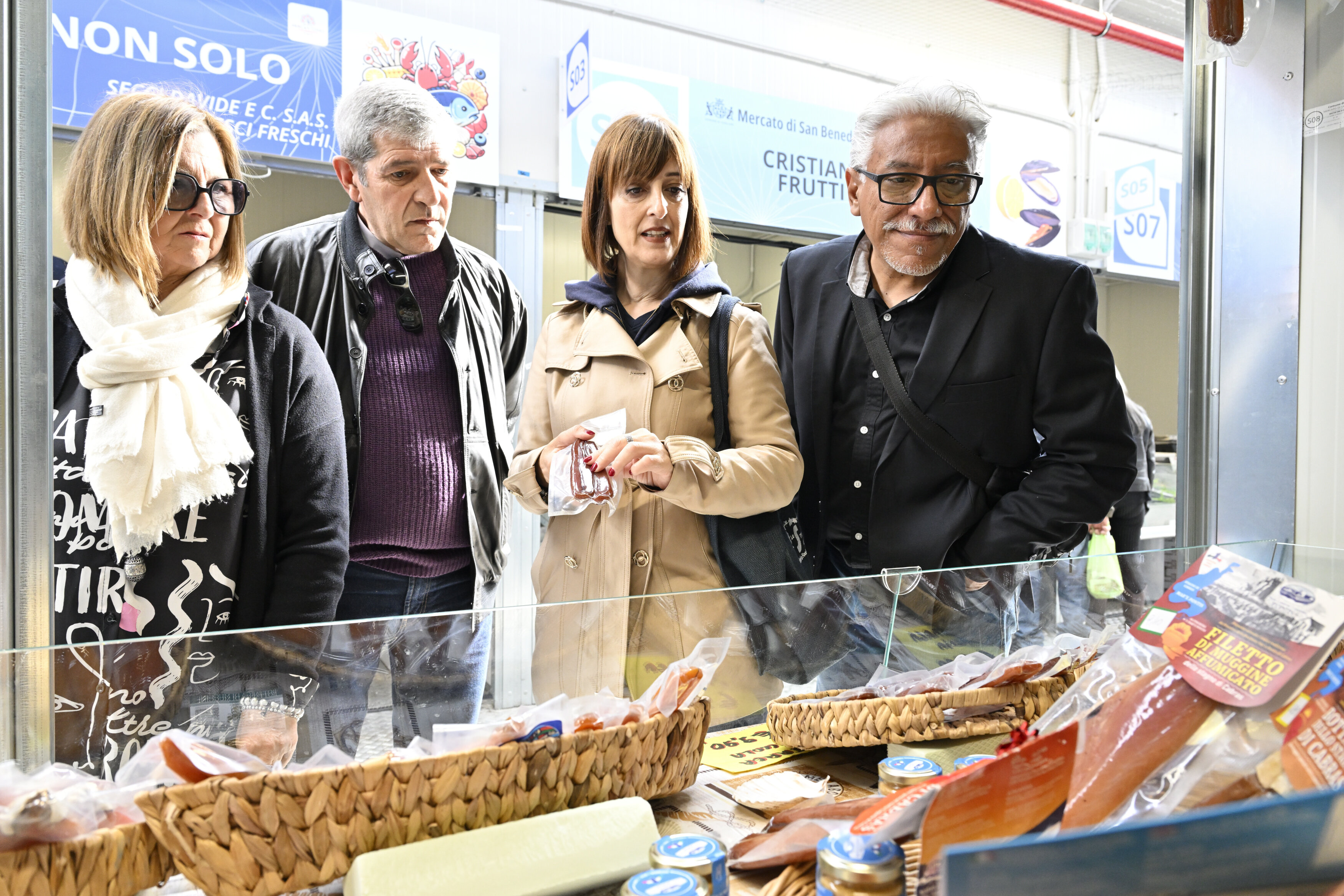
Visiting a food market with someone who knows the products and the people behind them.
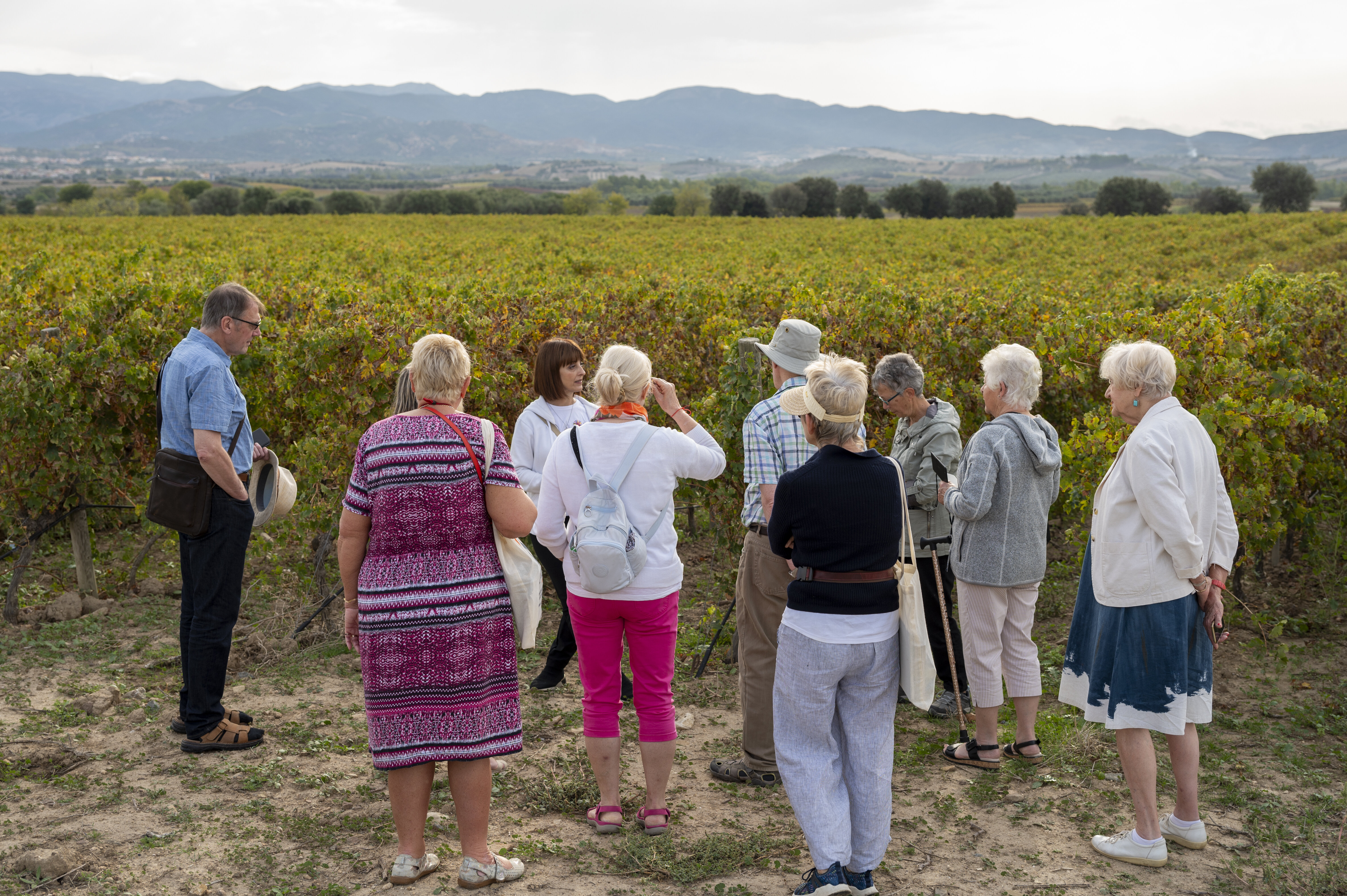
Touring a winery and then travelling out to the vineyards.
Visiting a cheese producer.
Taking part in a guided tasting.
Learning how to prepare a traditional Sardinian recipe.
These experiences respond particularly well to detailed, conversational questions.
And this is exactly the kind of request travellers can now make to an AI assistant.
This does not mean that AI will automatically recommend one specific business.
It does mean, however, that it is becoming increasingly important for an experience to be clearly and accurately described online.
For tourism businesses, the question is changing
For years, one of the most important questions for tourism businesses has been:
“How can I be found on Google?”
That question remains fundamental.
But another one is beginning to matter:
“When someone asks AI for exactly the kind of experience I offer, can my business become part of the answer?”
This also changes the way we should think about our online presence.
Simply having a website is no longer enough.
A tourism business needs to explain clearly:
where the experience takes place;
how long it lasts;
who it is designed for;
which languages are available;
what is included;
what makes the experience distinctive;
which part of the destination it helps travellers understand;
and which practical details guests need to know before booking.
The clearer and more consistent this information is, the easier it becomes to understand the real value of the experience.
That is useful both for travellers and for the digital systems that process publicly available information.
SEO and artificial intelligence are not separate worlds
There is growing discussion about how content should be structured for AI-powered search and recommendation systems.
But that does not mean traditional SEO is becoming irrelevant.
Quite the opposite.
A technically accessible website, clearly organised pages, up-to-date information, original content, genuine reviews and mentions from reliable sources all contribute to building a strong digital presence.
AI-powered discovery adds a new conversational layer to this.
The goal should not be to “write for an algorithm”.
The priority should be to explain clearly what we do, where we do it and why it matters.
What about real local knowledge?
There is one point I believe remains essential.
Artificial intelligence can collect, compare and organise an extraordinary amount of information.
But a destination is not simply a collection of data.
It is made up of seasons, people, habits, producers, timing and relationships.
A food market changes throughout the morning.
Harvest season does not happen all year round.
A small producer may only welcome visitors on certain days.
A place that looks very close on a map may take longer to reach than a traveller expects.
And behind a cheese, a wine or a traditional recipe there is often a story that cannot be fully understood without knowing the territory.
For this reason, I do not believe artificial intelligence will replace local knowledge.
But it may increasingly become one of the ways travellers discover it.
A change we are already seeing
For Le Strade del Gusto, this is not simply a theoretical discussion.
More and more guests tell us that they discovered our experiences after asking an AI tool for travel recommendations.
It is still too early to understand how important this discovery channel will eventually become.
But it is a change worth watching.
Until recently, the question was:
“What should I type into Google to find what I’m looking for?”
Today, it may be becoming:
“What should I tell AI so that it can recommend the right experience for me?”
And for tourism businesses, the corresponding question may be:
“Is my business described clearly enough to be recommended when someone is looking for exactly what I offer?”
Travel remains human. The way we discover it is changing.
In the end, travel is still made of the same things.
Places.
People.
Encounters.
Flavours.
Stories.
Artificial intelligence does not change that.
What it is beginning to change is the path that leads travellers to those experiences.
And perhaps one of the most interesting transformations in tourism over the next few years will not only be about how we book.
It will be about how we decide what is worth experiencing.


.jpeg "How to Visit San Benedetto Market Like a Local")
.png "10 cibi sardi da assaggiare assolutamente a Cagliari")
.png "10 Sardinian Foods You Must Try in Cagliari")